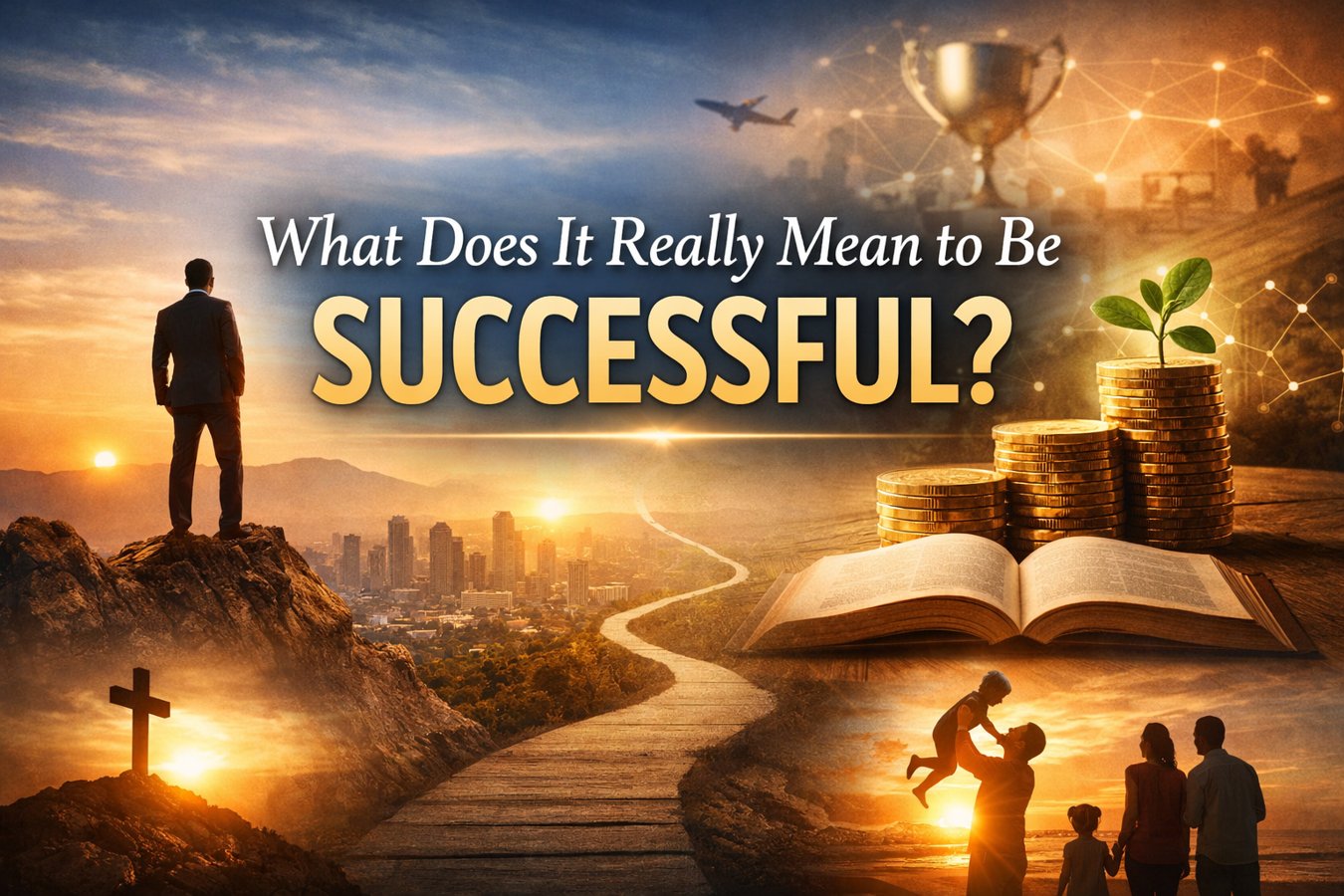
Ask ten people what success means and you will likely receive ten different answers.
For some, success is money.
For others, it is influence.
For many, it is recognition.
But if success were simply about wealth, the richest people would always be the most fulfilled. If it were about status, those with the highest titles would never feel empty.
Yet we know this is not always true.
In today’s world, success is often measured by visible achievements cars, houses, job titles, followers, and financial milestones. Social media amplifies this image, creating the impression that success is a race of appearances.
But beneath the surface, many people who appear successful are quietly exhausted, uncertain, or unfulfilled.
So the question remains:
What does it really mean to be successful?
The Traditional Definition of Success.
For decades, success has followed a predictable path:
- Study hard.
- Get a good degree.
- Secure a stable job.
- Earn a good salary.
- Acquire assets.
- Climb the career ladder.
This model worked for a long time. It offered structure and predictability.
But modern life has complicated that equation.
Many people now achieve these milestones yet still feel incomplete. The job may pay well but drain their energy. The lifestyle may look impressive but create constant financial pressure.
The traditional definition of success is increasingly being questioned.
Success Is Often Confused With Achievement.
One of the biggest misconceptions is confusing achievement with success.
Achievements are milestones.
- Promotions.
- Awards.
- Income levels.
- Business growth.
- Social recognition.
These things matter. They reflect effort and competence.
But achievements alone do not define a successful life.
True success goes deeper than accomplishments. It asks whether those accomplishments align with your values, purpose, and well-being.
A person can accumulate achievements yet still feel directionless.
The Invisible Dimensions of Success.
The most meaningful aspects of success are often invisible.
They cannot be easily displayed or measured.
These include:
Peace of Mind.
Success loses meaning if it comes with constant anxiety or emotional exhaustion.
Integrity.
The ability to achieve goals without compromising your values.
Purpose.
Knowing that your work contributes to something meaningful beyond personal gain.
Healthy Relationships.
Success means little if it isolates you from the people who matter.
Personal Growth.
Becoming wiser, stronger, and more self-aware over time.
These dimensions rarely trend on social media, yet they determine whether success is sustainable.
The Pressure to Appear Successful.
Modern society has created another challenge: the pressure to look successful.
Appearances have become powerful signals.
People feel compelled to demonstrate progress through visible symbols:
- Expensive lifestyles.
- Public achievements.
- Constant activity.
- Social validation.
But the pursuit of appearance can quietly distort priorities.
Some professionals maintain lifestyles that strain their finances. Some entrepreneurs chase recognition instead of stability. Some leaders prioritize image over impact.
When success becomes performance rather than purpose, the result is often stress and dissatisfaction.
Success Is Personal, Not Universal.
Another mistake many people make is adopting someone else’s definition of success.
What success means for a corporate executive may differ from what it means for an entrepreneur, a teacher, or a community leader.
For some, success may mean building financial independence.
For others, it may mean creating social impact.
For someone else, it may mean raising a family with strong values.
The danger comes when we measure our lives against standards that were never designed for us.
Success must be defined personally, not borrowed socially.
A More Balanced Definition of Success.
Perhaps success can be understood as a balance of four key areas:
1. Purpose.
Doing work that aligns with your values and contributes meaningfully.
2. Growth.
Continuously learning, improving, and expanding your potential.
3. Stability.
Building financial and emotional foundations that sustain life.
4. Impact.
Positively influencing others and leaving things better than you found them.
When these elements work together, success becomes deeper than achievement.
It becomes fulfillment.
A Philosophical Reflection.
Throughout history, thinkers and spiritual traditions have warned against defining life purely through material accumulation.
In the Bible, Jesus asked a question that still resonates today:
“What good is it for someone to gain the whole world, yet forfeit their soul?” Mark 8:36
This question challenges the assumption that external success automatically leads to inner satisfaction.
It invites us to examine what we pursue and why.
Rethinking the Journey.
Success should not be reduced to a destination reached after decades of effort.
Instead, it may be better understood as a way of living.
A successful life is one where:
- Your work aligns with your values.
- Your ambitions do not destroy your well-being.
- Your achievements contribute positively to others.
- Your growth continues throughout life.
Under this definition, success is not reserved for a few extraordinary individuals.
It becomes available to anyone willing to live intentionally.
A Question Worth Asking.
Perhaps the most important question is not:
“How successful am I?”
But rather:
“What kind of life am I building?”
Because in the end, success is not simply about how high you climb.
It is about whether the ladder is leaning against the right wall.
Let’s Start the Conversation.
Success means different things to different people.
But in a world increasingly focused on appearance and competition, it may be time to pause and rethink what we truly value.
What does success mean to you?
Is it wealth, impact, freedom, purpose, or something else entirely?
Share your thoughts and join the conversation.
No responses yet