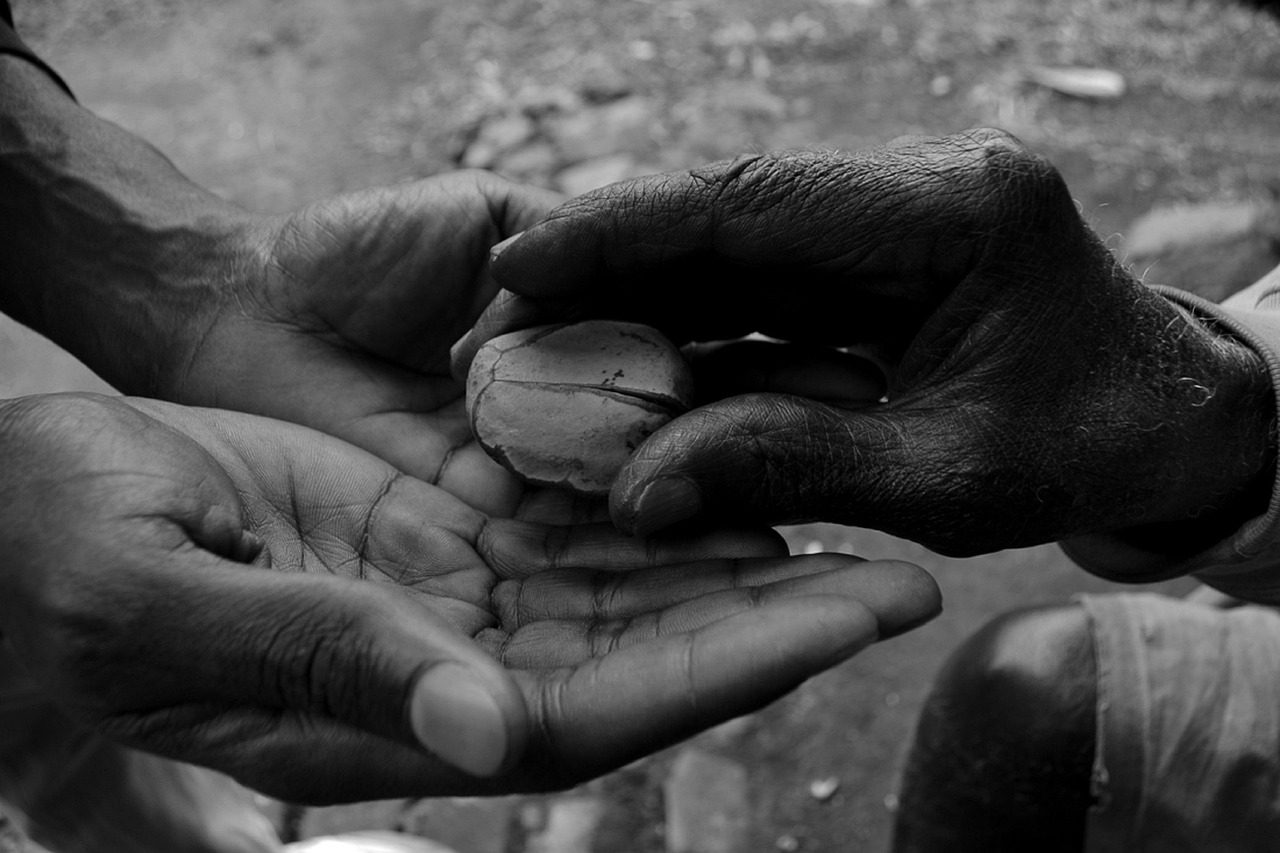
Many of us spend a significant portion of our lives focusing on what we do not have.
We wish we had more money, more education, better connections, greater opportunities, stronger support systems, or superior talents. We often believe that our breakthrough is somewhere in the future waiting for us to acquire something we currently lack.
This was the mindset Moses displayed when God called him to lead the Israelites out of Egypt.
When God appeared to Moses through the burning bush, Moses immediately began listing reasons why he was unqualified. He doubted himself. He questioned his abilities. He focused on his weaknesses.
Then God asked him a simple but powerful question:
“What is that in your hand?” (Exodus 4:2)
Moses answered:
“A staff.”
To Moses, it was merely a shepherd’s stick a common tool he used daily while tending sheep.
To God, however, that ordinary staff would become an instrument of extraordinary miracles.
The same staff would later be used to confront Pharaoh, perform signs and wonders, and part the Red Sea.
What made the difference?
God showed Moses that He often works through what is already in our hands.
Today, God may be asking you the same question:
• What is in your hands today?
• What gifts, talents, experiences, skills, networks, or opportunities has God already given you?
• Could the breakthrough you are praying for already be in your hands?
Before asking God for more, perhaps it is time to examine what He has already entrusted to you.
God’s Question to Moses.
The Power Behind God’s Question;
In Exodus 4:2, God did not ask Moses what he wished he had.
He did not ask about his education, influence, wealth, or speaking ability.
Instead, He asked:
“What is that in your hand?”
God’s question teaches a profound principle: God often starts with what we already have rather than what we wish we had.
Moses saw a staff.
God saw potential.
Moses saw limitation.
God saw possibility.
Moses focused on his weaknesses.
God focused on available resources.
This principle remains true today.
The Boda Boda Rider;
Many successful transport entrepreneurs started with one motorcycle.
Through discipline, savings, and hard work, some eventually acquired multiple motorcycles and now employ other riders.
The journey began with one bike.
The Small-Scale Farmer;
A farmer may begin with a quarter-acre piece of land.
By applying knowledge, consistency, and patience, that small plot can grow into a thriving agricultural enterprise supplying produce to markets and supermarkets.
The University Student;
Many young people possess powerful learning tools in their pockets.
A smartphone with internet access can provide courses in programming, graphic design, digital marketing, accounting, and entrepreneurship.
What seems ordinary can become a gateway to opportunity.
The Small Kiosk Owner;
Some businesses that now occupy large commercial buildings started as tiny roadside kiosks.
Their owners did not wait for perfect conditions.
They began with what was available.
The lesson is clear:
God often multiplies what we are willing to use.
Every Believer Has Been Given Something.
God Has Given Every Christian a Gift.
The Apostle Peter writes:
“Each of you should use whatever gift you have received to serve others, as faithful stewards of God’s grace in its various forms.” (1 Peter 4:10).
Notice Peter’s words carefully.
He does not say some believers.
He says each of you.
Every believer has received something from God.
You may not have the same gifts as someone else, but you have gifts that matter.
You have abilities that can make a difference.
You have opportunities that others may not possess.
Different Forms of Gifts;
Teaching Ability.
Some people naturally explain concepts clearly and help others understand.
These individuals can impact children, students, church members, and communities.
Worship and Music.
Singers, instrumentalists, and worship leaders help people connect with God.
Their gifts encourage, inspire, and strengthen faith.
Graphic Design and Creativity.
Creative individuals can use design, photography, video editing, and media skills to communicate powerful messages.
Farming Knowledge.
Agricultural expertise can help improve food security and empower communities.
Business Skills.
Entrepreneurs and business professionals create value, generate wealth, and provide employment.
Leadership.
Some people naturally organize, guide, and inspire others toward a common vision.
Encouragement and Mentorship.
A simple conversation can transform someone’s life.
Encouragers often have a profound impact that goes unnoticed.
Gifts Are Meant for Service.
God’s gifts were never intended solely for personal benefit.
Peter teaches that gifts should be used to serve others.
Your talent is not just about you.
Your knowledge is not just about you.
Your success is not just about you.
Everything God places in your hands carries a responsibility to bless others.
Your Gift Is Meant to Benefit Others
The Common Good
Paul writes:
“Now to each one the manifestation of the Spirit is given for the common good.” (1 Corinthians 12:7)
The purpose of spiritual gifts extends beyond individual achievement.
God gives gifts for the benefit of people around us.
When we use our gifts effectively, entire communities benefit.
The Secret of Influence.
The more your gift solves problems, the greater its impact.
People are naturally drawn to value.
When your gift helps others, opportunities often follow.
God’s design is simple:
Serve people well.
Create value.
Glorify God.
Modern-Day Staffs in Our Hands;
Things We Often Overlook.
Many people overlook the resources God has already provided.
Here are some modern-day staffs that may already be in your hands:
• Education
• Experience
• Smartphone
• Internet access
• Relationships
• Faith
• Health
• Time
• Knowledge
• Communication skills
• Creativity
• Professional expertise
• Small savings
• Social media platforms
God specializes in using ordinary things to accomplish extraordinary purposes.
Why People Ignore What Is in Their Hands.
• Comparison
• Fear
• Self-doubt
• Waiting for perfect conditions
• Fear of failure
• Believing others are more gifted
These barriers often prevent people from stepping into God’s purpose.
David defeated Goliath with a sling, not Saul’s armor.
God works through what He has already entrusted to us.
Lessons for Today’s Christian;
- Identify what God has already given you.
- Stop comparing yourself to others.
- Develop your gifts continuously.
- Use your gifts to serve others.
- Start small and remain consistent.
- Trust God with the results.
- Be faithful with little.
Many successful farmers started with a small piece of land.
Many business owners started with a single customer.
Many ministry leaders started by serving a few people faithfully.
Never underestimate small beginnings.
Key Takeaways;
• God often works through what is already available.
• Every believer has gifts and abilities from God.
• Spiritual gifts are meant to benefit others.
• Small resources can produce significant impact.
• Comparison and fear hinder progress.
• Faithfulness is more important than abundance.
• God can use ordinary people and ordinary resources for extraordinary purposes.
• Your breakthrough may begin with what is already in your hands.
Thousands of years later, God’s question to Moses still echoes across generations:
“What is that in your hands?”
Perhaps it is a skill.
Perhaps it is a business idea.
Perhaps it is your education.
Perhaps it is your experience.
Perhaps it is your profession.
Perhaps it is your network.
Perhaps it is your testimony.
Perhaps it is your faith.
Whatever God has placed in your hands, do not underestimate it.
The staff in Moses’ hand looked ordinary.
Yet God used it to change history.
The same God still works through ordinary people who are willing to use what they already have.
Stop waiting for perfect conditions.
Stop focusing on what is missing.
Stop comparing yourself with others.
Identify what God has entrusted to you.
Develop it.
Use it.
Serve others with it.
Trust God to multiply it.
Today, take a few moments and honestly answer God’s question:
“What is that in your hands?”
Your answer may reveal the very tool God intends to use for your next season of purpose, impact, and transformation.
********** The End**********
No responses yet